The Met police promotion process for 2026 looks different from the one most officers rehearsed last year, and the question doing the rounds is whether the Met has dropped the Competency and Values Framework (CVF). The short answer is no. The longer answer changes how you prepare.
The Metropolitan Police Service now runs a future-focused interview, scored on your potential for the next rank rather than on past examples marked against CVF behaviours. That reshapes how the questions are worded and what a strong answer sounds like. If you walk in with a folder of STARR stories, you'll answer the wrong question well.
Has the Met dropped the CVF?
No, the Met has not dropped the CVF. It still underpins the assessment criteria, alongside the Met's own principles and values. What has changed is that the CVF is no longer the test. You're no longer scored on how well you evidence a competency against a descriptor, but on whether you show the potential to lead at the rank you're applying for.
That distinction matters because plenty of the commentary online frames this as the Met "moving away from the CVF", which is misleading. An officer who understands the CVF is still better equipped, because the behaviours it names are still the behaviours assessors recognise. The Met's own officer promotion overview sets the criteria out, and it's worth reading in full before you build a single answer.
To understand what's underneath the new criteria, start with our explainer on CVF 2024, which is still relevant to a Met candidate, just not in the way it was a year ago.
How is the Met police promotion process scored now?
The interview is marked on a four-point potential scale rather than the five-point CVF scale the other 42 forces use. The four ratings are Limited, Developing, Acceptable and High. They are whole numbers, so there is no five, and assessors aren't totting up how many indicators you hit against a competency.
The Met sets out the indicators of potential it looks for. They cover how quickly you learn and apply new thinking, how self-aware you are about your strengths and growth areas, whether you show genuine curiosity, how you lead and influence, and whether your behaviour role-models the Met's principles and values. Those indicators map onto familiar CVF behaviours, which is the clearest sign the framework still runs underneath.
What separates an Acceptable from a High sits in our guide to how Met potential is scored.
What does a future-focused interview actually ask?
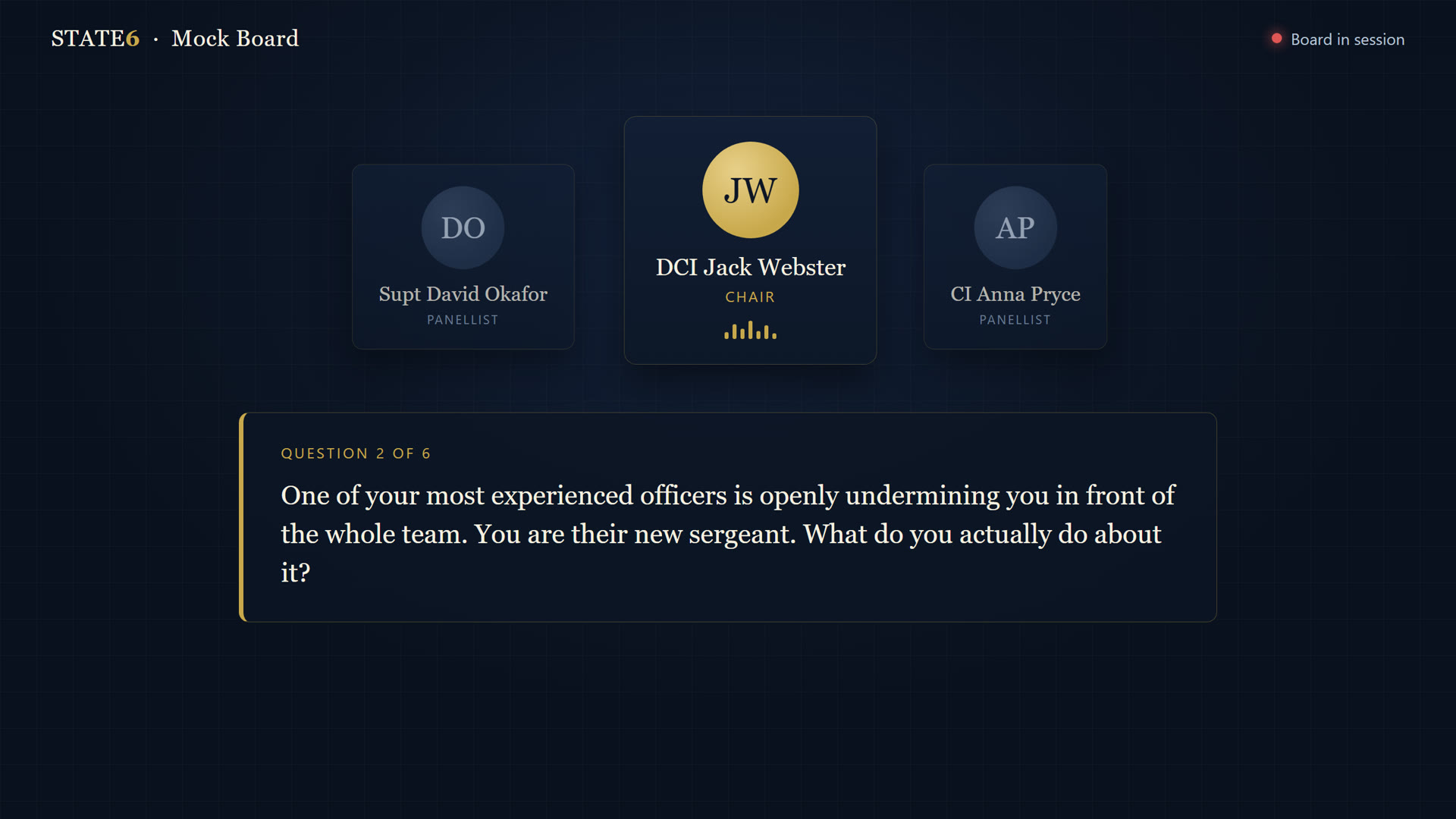
A future-focused interview asks how you would lead and decide in the role you're applying for. The tense is the tell. "How would you" and "what would you do" have replaced "tell me about a time". The panel wants to see how you'd handle the rank, not how you handled a situation at your current one.
You can still reach for a past example to illustrate a point, and a good candidate often will. But the interview is predominantly forward-looking, so an answer built around a war story scores poorly. If you've practised forward facing questions for any board, our guide to structuring a forward facing answer translates directly to the Met format.
One thing the Met assesses directly is integrity. Chasing a target or gaming a metric at the public's expense is treated as a concern, not a strength, so an answer that frames a shortcut as decisive leadership does real damage. The full picture lives in our Met future-focused interview guide.
What else changed besides the interview?
Two structural changes sit either side of the interview. The first is the gateway. A "ready for promotion" potential rating in your PDR now acts as the entry point the old application form used to be. As currently published, your PDR ratings have to clear that bar before you're eligible. We cover what that means in our guide to the PDR gateway.
The second is the additional exercise that runs alongside the interview at the assessment centre, the Role Specific Leadership Exercise (RSLE). It tests how you'd handle the work of the rank rather than how you talk about it. As currently published the exact format isn't something to guess at, but the preparation is the same discipline as the interview: think like the rank, not the role you hold now.
Why did the Met change the process?
The change is driven by the Met's published reform plan, A New Met for London (Phase 2), the post-Casey direction for the force. The reasoning is that a force rebuilding trust needs leaders chosen for where they can take a team, not only for how well they can recall past work. Selecting on potential is the lever the Met has pulled. We unpack the plan itself, and how it shapes each of the five interview areas, in our guide to what A New Met for London means for your board.
This all sits inside the wider National Police Promotion Framework (NPPF). The Met hasn't stepped outside it, but has used the room within it to assess differently, which is why a Met board now feels unlike a board in a neighbouring force.
What does this mean for how I prepare?
Stop preparing examples and start preparing positions. The old instinct, arriving with a bank of evidence mapped to each competency, doesn't fit a future-focused interview. You need to say what you'd do as the rank, grounded in real policing judgement, and show the integrity and self-awareness the four-point scale rewards.
State6 is built on the Met's actual model. The future-focused question generator gives you questions in the right tense, the review marks your answer against the 1 to 4 scale and the five indicators of potential, and the Met mock board lets you sit it out loud. You bring the experience. We give you the structure to frame it for the way the Met now scores.
For how the NPPF works and what panels score at each rank across all 43 forces, see our complete guide to UK police promotion boards, and for the Met-specific picture start at our Met promotion hub.
You can try the Met review free. Start your free trial and put a future-focused answer through the 1 to 4 review, no card needed.