A New Met for London is the Metropolitan Police's published reform plan, and it is the reason the Met promotion process now looks the way it does. If you are preparing for a Met board in 2026, the plan is not background reading. It is the operating context your panel lives in every day, and the future-focused questions you will face are built out of the pressures it describes.
This guide explains what the plan is, why it reshaped promotion, and how to let it inform your answers without turning them into a recitation of initiative names.
What is A New Met for London?
A New Met for London is the Met's reform programme, published after the Casey Review set out in stark terms what needed to change in the force. It is the Commissioner's public commitment to rebuild trust with London, raise professional standards and cut crime, and it is now in its second phase. The current plan is published on the Met's own site under A New Met for London, and it is worth reading in full before any Met assessment.
The plan matters to promotion because it changed what the Met wants from its leaders. A force rebuilding trust needs supervisors and inspectors chosen for where they can take a team, not only for how well they recall past work. That reasoning is what produced the future-focused interview and the potential-based scoring we cover in what changed in Met promotion for 2026.
Why does A New Met for London matter at a promotion board?
Because the interview is future-focused, every question asks how you would lead in the rank you are applying for. The situations the panel puts to you are not abstract. They are the live dilemmas of a force part-way through reform: scrutiny of stop and search alongside communities that still distrust how the power is used, relentless demand on tired teams, handing some mental-health calls back to health partners while worrying about the person who falls through the gap.
A candidate who understands the direction of the force answers those questions differently. Not with jargon, but with judgement that fits the moment. The panel is listening for whether you grasp that standards, trust and performance are the job now, and whether your instincts as a leader run in the same direction as the plan.
How does the reform plan show up in the five interview areas?
The Met interview assesses five Success Profile areas, and each one maps onto a live strand of the reform programme.
Integrity sits alongside the Met's standards clear-out, faster vetting and misconduct removal, and initiatives such as Operation Onyx. Expect scenarios about corners being cut, figures you are pressed to sign off, or cultures where reporting a colleague feels like disloyalty.
Leads Inclusively connects to the Stop and Search Charter, the London Race Action Plan and community scrutiny. Scenarios here tend to put proactive officers who feel second-guessed on one side and communities with low trust on the other.
Being Resilient reflects the wellbeing strand of the plan, from fatigue risk management to trauma support. The dilemmas are about teams running on empty and officers who insist they are fine when they are not.
Planning and Prioritising tracks reforms such as Right Care Right Person and risk-based prioritisation. You cannot do everything with the resources you have, and the panel wants to see how you decide what stands down.
Drives Engagement lines up with the Leadership Academy and a performance culture that now weighs behaviour as well as delivery. Scenarios centre on morale, retention and rebuilding a team's sense of purpose.
How each answer is then marked sits in our guide to the Met's 1 to 4 potential scoring.
Do you need to memorise the initiatives?
No, and trying to is a trap. The interview is not a recall test, and no panel awards marks for naming a programme. A capable candidate from any force could answer a Met future-focused question well without ever having heard an initiative's name, because the marks come from your reasoning and your judgement, not from vocabulary.
What the plan gives you is orientation. If you know the force is rebuilding trust and lifting standards, you will not frame a shortcut as decisive leadership, you will not treat community scrutiny as an obstacle, and you will not sacrifice an officer's welfare to a number. Integrity is directly assessed at a Met board, and the plan tells you exactly why. The full picture of the interview itself is in our Met future-focused interview guide.
How do you prepare with the plan in view?
Read the plan once, properly, and then put it down. From there, prepare positions rather than examples. For each of the five areas, work out where you stand on the live tensions above and how you would lead a team through them at your target rank. Ground every position in real policing judgement, and check it against the direction the force has published.
Remember too that the interview is only part of the process. Eligibility runs through the ready for promotion PDR gateway, and at Inspector rank the Role Specific Leadership Exercise sits alongside the interview as one of the two assessed parts, as currently published.
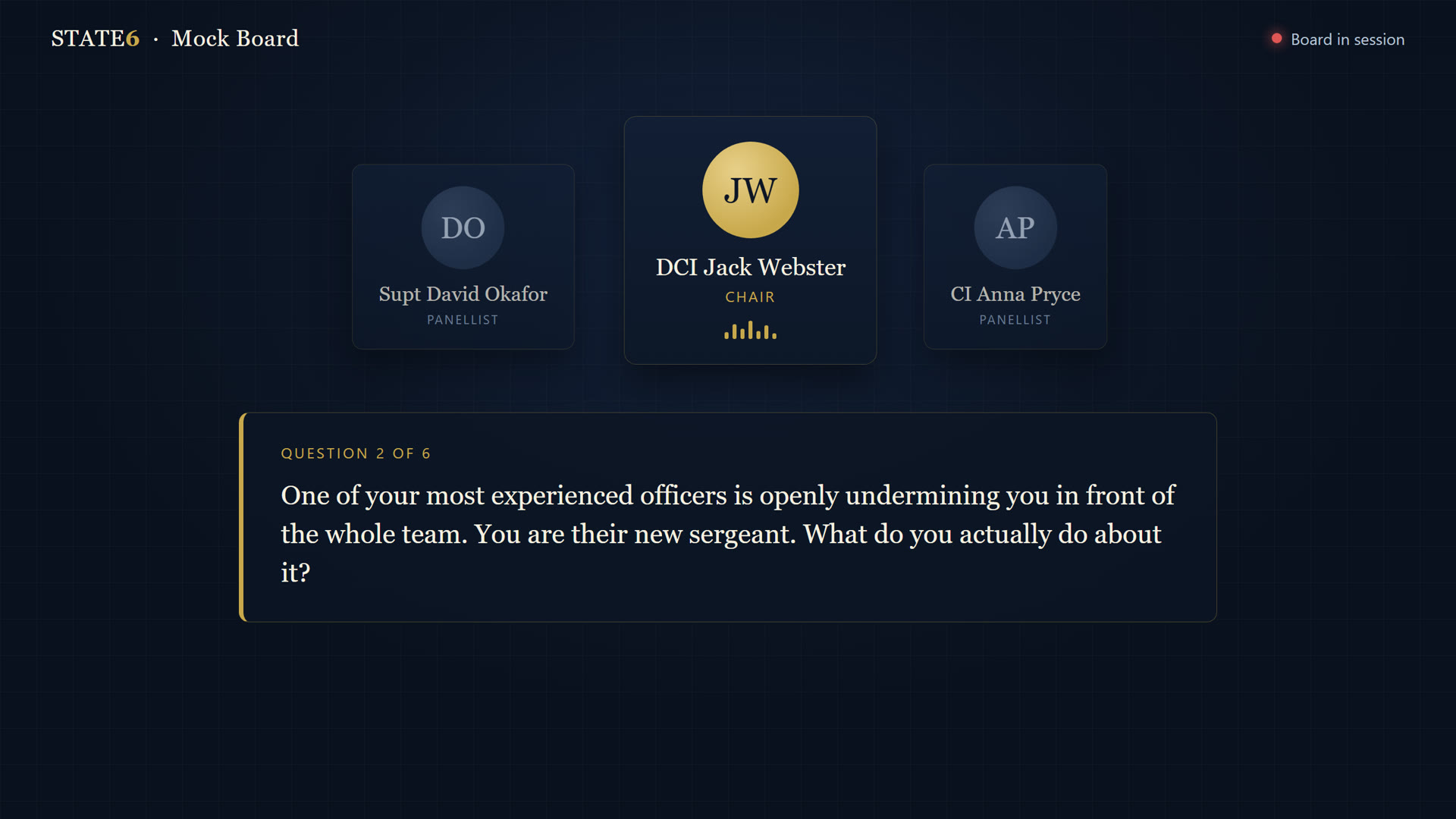
State6's Met mode is built on this model. The question generator writes future-focused questions grounded in the Met's own context, including its HMICFRS findings and the reform pressures described here, reviews mark you 1 to 4 against the five indicators of potential, and the voiced Mock Board lets you sit the whole thing out loud. Start at the Met promotion hub, or see the complete UK promotion board guide for how the wider framework works.
You can try the Met review free. Start your free trial and put a future-focused answer through the 1 to 4 review, no card needed.